In Between Shades
Interactive Installation,
built with Touchdesigner, Leap Motion controller and Arduino
In Between Shades is an interactive sculpture that confronts us with the significant decline of coral reefs due to the impact of climate change. Using imaginative forms of a coral, together with digital visuals lit from below, it evokes a pale, unhealthy reef that has undergone coral bleaching - a process where corals lose their vibrant colors; yet hints at a state of restlessness, a resilience to get better. It reflects the hope we still have in relation to the current state of our climate crisis - at risk, but still reversible.
By hovering your hand on the sensor in front of the artwork, you can revive the corals momentarily. This symbolic act shows how corals can recover from the bleaching process with human intervention and highlights the importance of individual action in safeguarding our ocean's delicate ecosystems.
The sculpture through the use of industrial materials also challenges complacency with man-made environments amidst Singapore's urbanity. It prompts reflection on our acceptance of artificial landscapes and questions our tolerance for genuine environmental crises, encouraging contemplation about societal acceptance roots.
Awarded Honorable Mention at #CreateCOP28
presented by Art Partner and Earth Partner


Personal Context and Research
As a diver, I’ve always been drawn to Southeast Asian waters, yet my greatest curiosity was reserved for my own home country, Singapore. While local diving is often dismissed for its murky conditions and poor visibility, those exact challenges are what intrigued me.
During my final-year project(FYP) research, I began learning more about coral ecosystems and discovered that Singapore’s reefs, despite covering only a fraction of the area of the Great Barrier Reef, host nearly half as many coral species due to the country’s position within the Coral Triangle. Even more striking was how these reefs have adapted to survive under constant sedimentation and urban development, thriving in close proximity to oil refineries such as Pulau Bukom.
Through this research, coral bleaching repeatedly surfaced. I encountered creative restoration efforts, from rebuilding reef structures with LEGO pieces to playing underwater soundscapes to attract fish back to damaged reefs. Although corals ended up not being the focus of my FYP, the tension they embody, between fragility and endurance, stayed with me. Over time, this research resurfaced through sketches, material tests, and interactive experiments.

Top Left: Photo of coral reefs in the waters off Shell’s biggest refinery at Pulau Bukom, from Singapore Reef Watch on Facebook
Top Right: Coral Triangle
Bottom Left: Playing sounds of healthy reef to lure back fishes, Photo by Harry Harding
Bottom Middle: Coral attached to Lego pieces are suspended on fishing lines, Photo by Wallace Woon
Bottom Right: Screen capture from a Zoom Interview I did with a PHD student focusing on coral science

Sketches I did
Research and Process (Developed Concurrently)
The project developed through parallel streams of research into corals and physical testing. Sketchbook studies and digital renders explored coral morphology and branching structures, translating biological forms into simplified geometries. These sketches guided the design of modular coral forms that could accommodate internal electronics while maintaining an organic appearance.
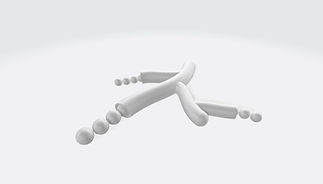


Abstract renderings of the Staghorn coral, Elkhorn coral, Pillar coral
Because the project required a material that was both light-permeable and easy to model for rapid iterations, traditional mediums like clay were unsuitable. This led to experiments with transparent 3D-printed filaments and bead structures. The latter provided the desired transparency and organic form without the time constraints of printing solid spherical geometries.


Left: Testing color penetration relative to the thickness of each print
Middle: Exploring methods to combine the tubular coral structures, eventually settling on a pre-fabricated circular acrylic plane
Right: Hand-beading process and attaching


I designed a 3D coral body that accommodates the motor, gear, and pinion.
This structure allows the top part of the coral to slide into the center while providing the stability necessary to keep the motors securely in place.

The first few print test lacked structural reinforcement, causing the motor mounts to break under the component's weight.


Improved rendition to extend the supports
to provide more weight and stability
Early prototypes also tested the movement of individual coral elements, focusing on vertical growth and retraction.
Testing the linear actuation on the different coral forms, and whether the concept works physically
Interaction Logic & Visual Language
The interaction system was designed as a direct metaphor for coral bleaching and recovery. In this installation, the participant’s hand represents human presence within the ecosystem, while the colour spot represents the algae that gives corals their colour. Coral bleaching occurs when environmental stress causes coral polyps to expel this symbiotic algae living in their tissues. If conditions stabilise, the coral can recover by repopulating its algae.
When participants hover their hands above the Leap Motion sensor, the colour spot appears on the screen and follows the movement of their hand and moves fluidly.
The translucent 3D-printed coral sculptures sit directly above the screen. When a color spot aligns beneath a sculpture, it casts light upward to visually "restore" the coral and trigger its growth. As the color moves away, the coral slowly retracts, symbolising the process of bleaching.
By tying these elements together, the work frames recovery not as a one-time action, but as an ongoing relationship between human behavior and ecological response.
I conducted a proof-of-concept experiment to tie the visual and technical components together, building the initial prototype around a plastic water bottle.
Early visual tests of the liquid color spots revealed issues with the animation.
The colors did not fade fast enough and exhibited a jittery "vibration" rather than a smooth, flowing motion.
Building the System
The electronics and interaction logic were developed in tandem with physical prototyping. I used a Leap Motion sensor to track hand movements, translating spatial data into a "color spot" mapped to the X and Y axes within TouchDesigner. Below each coral sculpture, I mapped invisible triggers, squares set to 0% opacity.


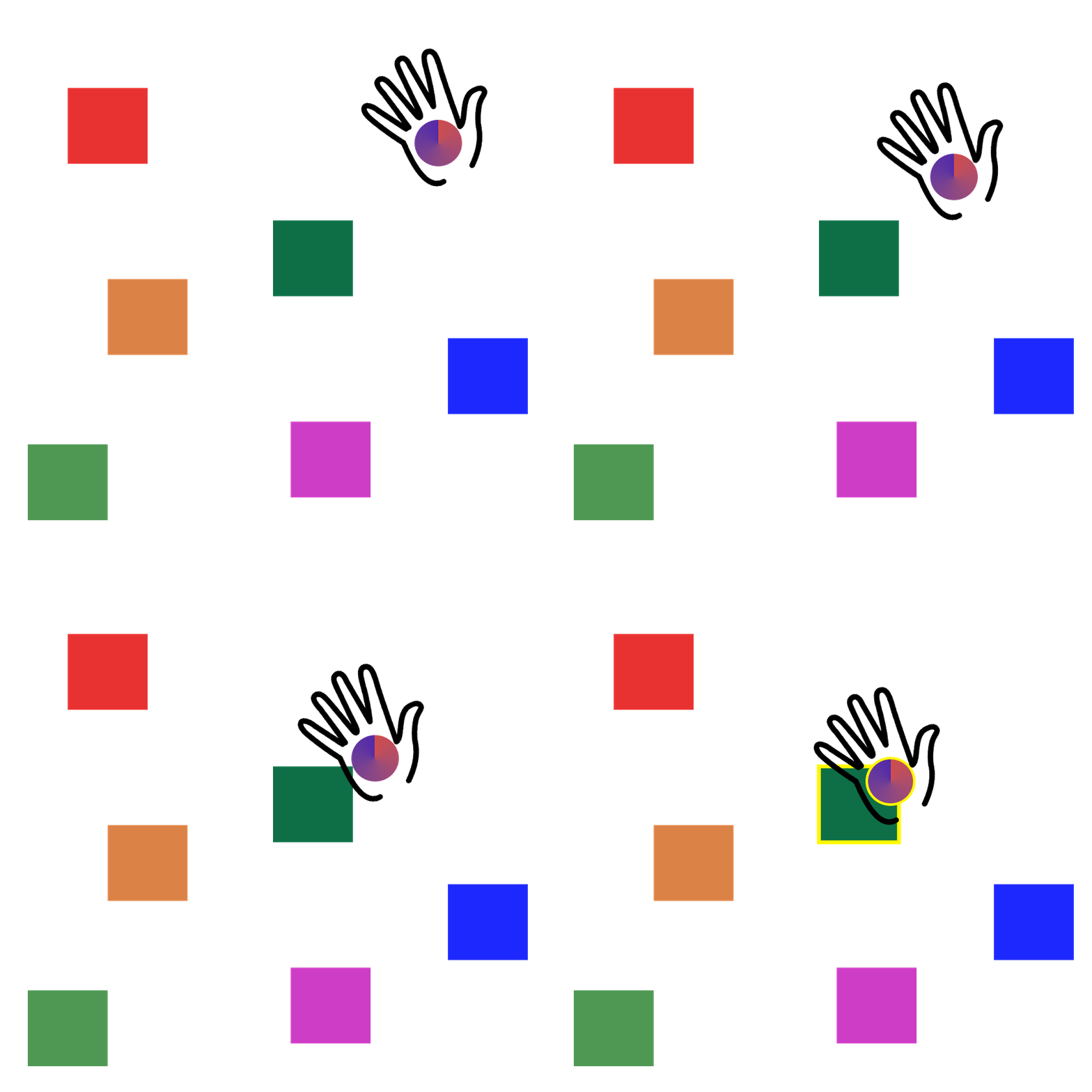

When the color spot and the trigger squares overlapped, TouchDesigner sent a character-based message to the Arduino via OSC (Open Sound Control). For example, if the spot intersected with square 'B', TouchDesigner transmitted the corresponding character to the Arduino, which then activated the motor for the coral positioned directly above it.

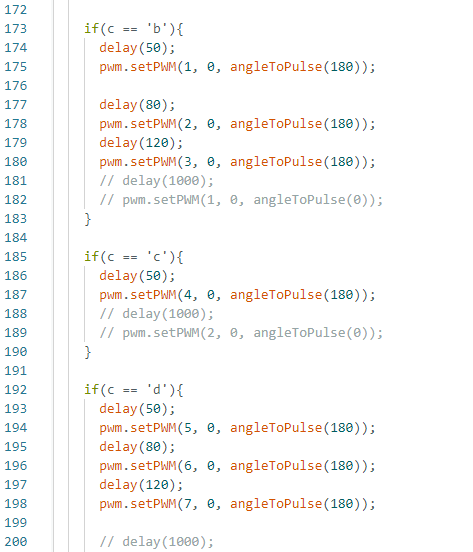
Code from Arduino:
To receive the alphabet message and trigger the correct motor accordingly
Code from TouchDesigner:
To send the corresponding alphabet message upon overlap
To manage the array of motors, which exceeded the Arduino's native pin capacity, I integrated a PCA9685 PWM Driver. This allowed for independent control of each motor, ensuring every coral element could react individually to the user's interaction.

PCA9685 PWM Driver,
My first time working with one
Final coral arrangement, fully integrated and wired
All cables are managed using heat-shrink tubing.

Installation and Spatial Considerations
The installation was designed as a contained and intimate encounter. I decided to keep the sensor and art piece separate because logically it didnt make sense to trying to integrate the whole piece onto one pedestal. During user testing, I observed that participants instinctively moved their hands up and down, mimicking the physical motion of the corals rather than guiding the color across the screen.
To address this, a laser-cut instructional element was added around the sensor. Rather than explaining the system in detail, it subtly redirected movement toward horizontal hovering.
.jpg)
Lighting conditions were controlled so that the primary illumination came from the screen, allowing colour and motion to define the space.


Digital mockups of the installation
PC ended up being placed on the other end away for the audience

Final placement of the piece
Reflection
The development of In Between Shades was physically and mentally exhausting in ways I didn’t fully anticipate. Much of the process involved repeated decision-making around constraints that felt both practical and conceptual. The fabrication process was especially demanding. The 3D printer failed repeatedly, leading to wasted time and material. I constantly questioned whether the coral forms were recognisable enough or too abstract and whether using plastic as a material would be misread as contradictory rather than critical. At some point, I also started questioning if a linear vertical movement was sufficient to represent growth, or if I should have pursued a complex, kinetic unfolding similar to the works of Studio Drift.
Through these struggles, I learned to trust process over polish. Not every element had to be perfect. In fact, one motor failed midway through the exhibition. At that moment, there was nothing to do but repair and move on. Ultimately, I am grateful to have realised this vision for such a significant opportunity.